In this project, I built a data-driven customer segmentation system that analyzes grocery purchase behavior to identify distinct consumer groups. The goal of the system is to uncover patterns in purchasing habits and enable businesses to personalize marketing strategies, product recommendations, and promotional campaigns.
Customer segmentation plays a critical role in modern retail analytics. By understanding how customers behave, companies can design targeted marketing strategies that increase engagement, improve retention, and optimize revenue.
This project demonstrates how unsupervised machine learning techniques can be used to discover meaningful customer segments based on purchasing behavior.
Table of Contents
- Project Overview
- Dataset Overview
- Feature Engineering
- Customer Segmentation Methodology
- Model Implementation
- Segment Interpretation
- Business Applications
- Scaling and Production Considerations
Project Overview
Context
Retailers collect large volumes of transactional data from customer purchases. However, raw transaction logs alone provide limited insight into how customers behave.
By analyzing purchase behavior patterns, it is possible to group customers into segments that share similar characteristics, such as dietary preferences, spending habits, product category preferences, and purchase frequency.
These insights can help businesses answer questions such as:
- Which customers prefer healthy food products?
- Which customers frequently purchase ready-made meals?
- Which customers are high-value shoppers?
- Which customers may respond well to targeted promotions?
To explore these questions, I built a machine learning pipeline that segments customers based on their grocery purchasing behavior.
Dataset Overview
The dataset used in this project contains transactional purchase records from a grocery retailer.
Each row in the dataset represents a product purchased by a customer. The dataset includes information such as customer identifier, product category, purchase quantity, order frequency, and product department.
These records allow the construction of aggregated features describing each customer’s overall shopping behavior.
Feature Engineering
To prepare the data for clustering analysis, I performed several feature engineering steps.
First, I aggregated purchase transactions at the customer level, generating summary statistics that capture key aspects of shopping behavior.
Examples of engineered features include:
- total number of purchases
- frequency of purchases
- proportion of purchases by product category
- average basket size
- spending patterns across departments
These features allow each customer to be represented as a feature vector summarizing their purchasing habits.
Before applying clustering algorithms, I normalized the features to ensure that variables with larger numeric ranges did not dominate the clustering process.
Customer Segmentation Methodology
Customer segmentation is commonly performed using unsupervised learning techniques, which identify hidden structure in data without requiring labeled outcomes.
In this project, I applied clustering algorithms to group customers based on similarities in their purchasing behavior.
The objective of the segmentation model is to:
- identify clusters of customers with similar shopping patterns
- highlight behavioral differences between customer groups
- provide insights that support marketing and business decision-making
Model Implementation
I implemented a clustering pipeline using K-Means clustering, a widely used algorithm for customer segmentation.
The workflow consists of the following steps:
- Preprocess and normalize customer features.
- Determine the optimal number of clusters using the Elbow Method.
- Train the clustering model on the transformed dataset.
- Assign each customer to a cluster based on their purchasing behavior.
The clustering algorithm groups customers such that individuals within a cluster have similar purchasing patterns, while clusters themselves remain distinct from one another.
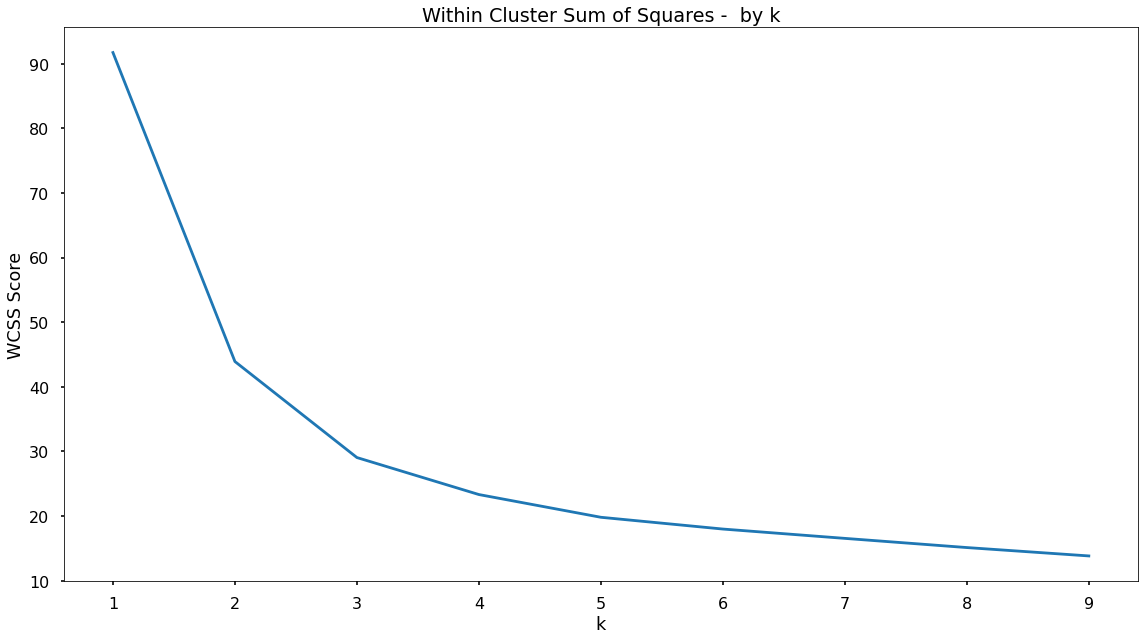
The elbow plot helps compare the improvement in cluster fit as more clusters are added. I use this alongside interpretation of the resulting customer groups.
Segment Interpretation
Once the clusters were generated, I analyzed the behavioral characteristics of each customer segment.
By examining feature distributions across clusters, I was able to identify distinct customer profiles:
Health-Conscious Shoppers Customers who frequently purchase fresh produce, organic products, and healthy food options.
Convenience-Oriented Shoppers Customers who primarily purchase ready-to-eat meals and packaged products.
Bulk Buyers Customers who purchase large quantities of staple goods and household essentials.
Occasional Shoppers Customers with low purchase frequency who tend to buy only a few items at a time.
These behavioral segments reveal meaningful differences in how customers interact with the grocery platform.
Business Applications
Customer segmentation insights can support several important business use cases.
Personalized Marketing Retailers can design targeted marketing campaigns tailored to the preferences of each segment — for example, promoting healthy food bundles to health-conscious shoppers or advertising meal kits to convenience-oriented shoppers.
Product Recommendations Segmentation can improve recommendation systems by suggesting products that are popular within a customer’s behavioral group.
Customer Retention Segments with declining purchase frequency can be identified and targeted with retention campaigns.
Inventory Optimization Understanding purchasing patterns can help retailers forecast demand for different product categories.
Scaling and Production Considerations
While this project demonstrates a proof-of-concept segmentation system, production implementations would require several enhancements.
Automated Data Pipelines
Customer segmentation models should be retrained regularly using updated transaction data through automated data pipelines.
Real-Time Behavioral Features
Modern retail systems often integrate real-time behavioral signals such as browsing behavior, cart activity, and clickstream data.
Advanced Representation Learning
More advanced approaches could incorporate deep learning methods such as autoencoders, embedding models, and representation learning. These techniques can capture more complex behavioral relationships than traditional clustering methods.
Integration with Recommendation Systems
Customer segments could be integrated into recommendation engines to personalize product suggestions and promotions.
Conclusion
In this project, I developed a machine learning–based customer segmentation system that identifies behavioral groups within grocery purchase data.
By applying unsupervised learning techniques to transactional data, I was able to uncover meaningful customer segments that reveal differences in purchasing patterns and preferences.
These insights demonstrate how data-driven segmentation can help businesses improve personalization, optimize marketing strategies, and better understand customer behavior.
Future improvements could incorporate deep representation learning, real-time behavioral features, and automated retraining pipelines, enabling segmentation models to operate effectively in large-scale retail environments.